


Biophilic Art: Bringing Nature Back Into the Way We Experience Space
A subtle return to nature
In a fast-moving, urban world, with eyes constantly on screens and days spent largely indoors, there's a growing demand for spaces that feel softer, calmer, more human. People crave nature, but meaningful contact with it is rarely built into everyday life. Biophilic art offers one answer to that disconnect.
Biophilic art brings the patterns, rhythms, and sensory qualities of the natural world into the spaces people move through every day. It accomplishes this in ways that go far beyond a landscape print on a wall.
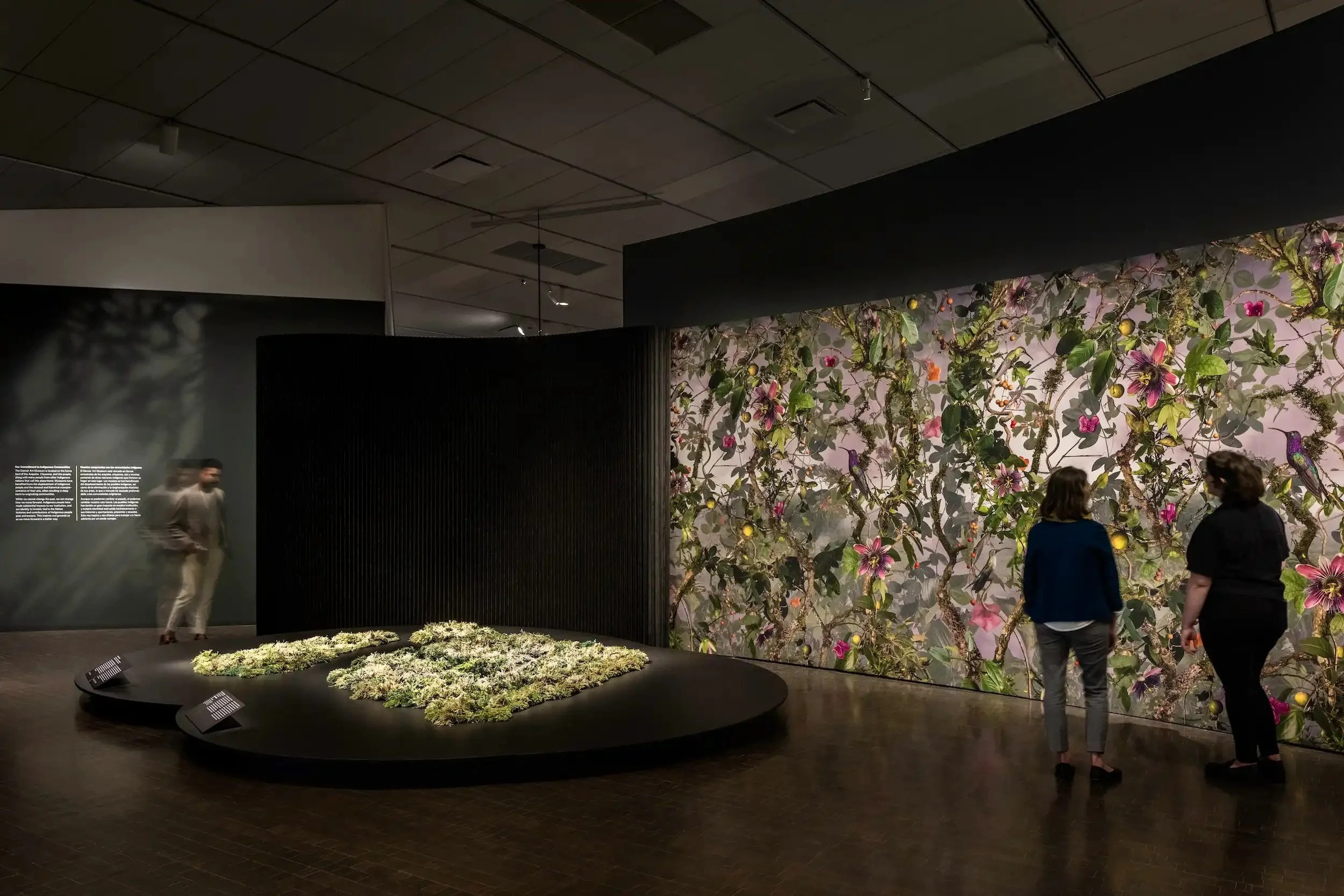
Alexandra Kehayoglou, Bajío (Lowland), 2024. RIGHT: Jason DeMarte, Arcadia, 2021. Photo by James Florio Photography
More than nature-inspired
Biophilic art often works quietly. It operates through organic forms that shift light and shadow, incorporates tactile and sensory materials, and moves in ways that mimic the rhythms of natural systems. The goal is not just to recreate nature but rather to create the feeling of being in nature.
Why it matters
What sets biophilic art apart is its impact on how we feel in a space. In the right context, it can reduce stress and visual fatigue, create a sense of calm, and improve focus and overall well-being. This is why it's increasingly appearing in environments where those things matter most: healthcare settings, workplaces, transit spaces, and public buildings.
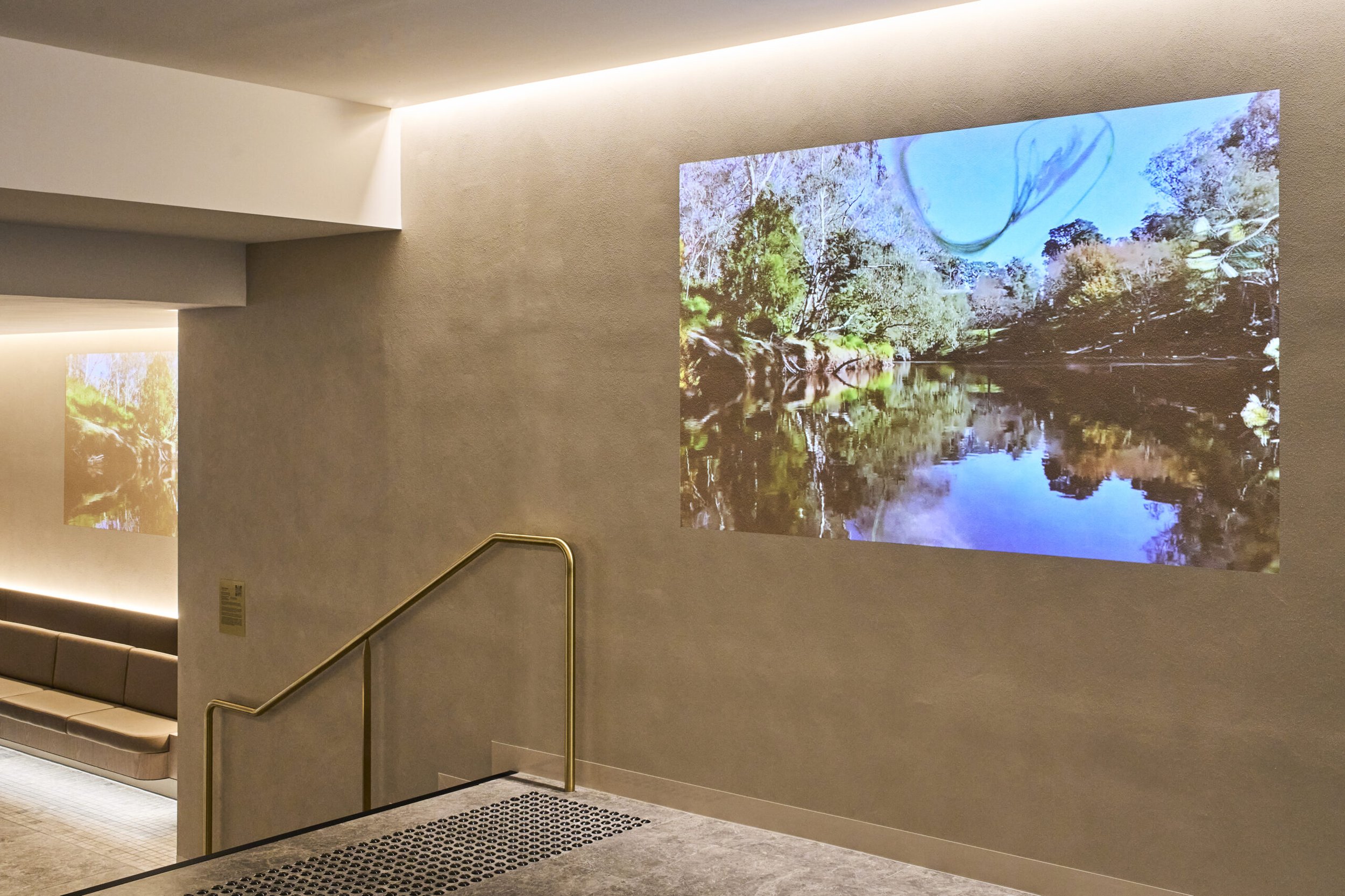
James McGrath, Wetlands Flowers. 555 Collins Street, Melbourne, Client: Charter Hall. Photo: Claire Armstrong.
Biophilic art in practice
A strong example of this is James McGrath's digital installation Wetlands Flowers, commissioned as part of an Art Pharmacy project and embedded into the built environment at 555 Collins Street in Melbourne. Inspired by the wetlands of Victoria, the series of three projected artworks presents dramatic visuals of the Yarra River and Wilson's Prom, with digitised motifs of native Australian flowers dancing across panoramic scenes of river banks, estuaries, and wetlands. The visuals are accompanied by a soundscape built from field recordings made while kayaking along the Yarra River, composed by Barton Staggs with piano by Tamara-Anna Cislowska. Together, they transport viewers into the wetlands without ever having left the building. It's a reminder that biophilic art, at its best, isn't decorative. It's immersive, multisensory, and deeply rooted in place.
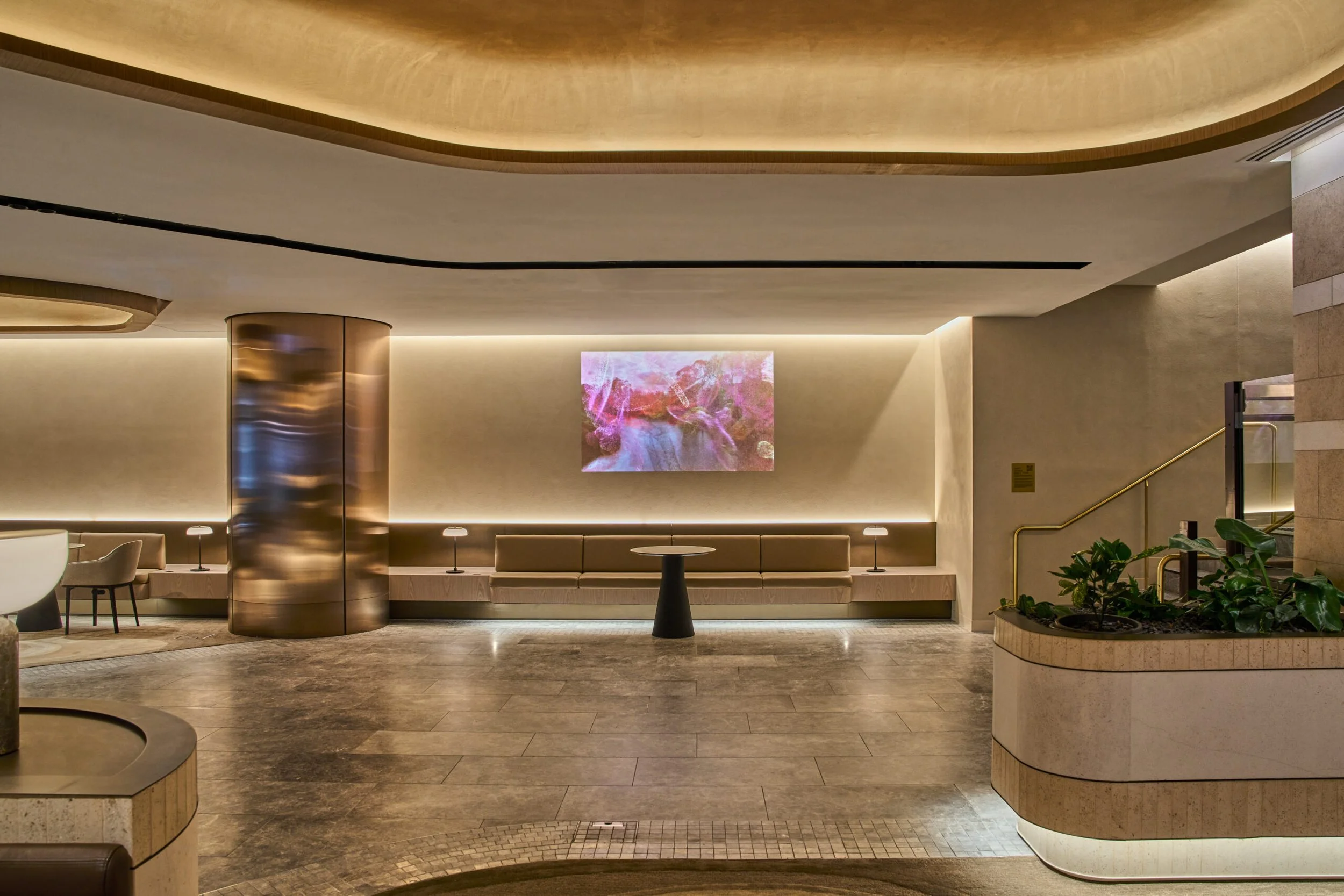
James McGrath, Wetlands Flowers. 555 Collins Street, Melbourne, Client: Charter Hall. Photo: Claire Armstrong.
Art you don't always notice
Biophilic art often isn't loud or attention-seeking. It's integrated, atmospheric, sometimes almost invisible. You might not consciously register it as art, but you notice how the space shifts. The building becomes more grounded, open, and easier to be in. That quality of going unnoticed while still being deeply felt is, in many ways, the point.
A shift in what art does
At its core, biophilic art reflects a broader shift in how we think about art's role: from something we look at to something we experience. It’s less about statement-making, more about creating a feeling. Less about the object, more about the effect.
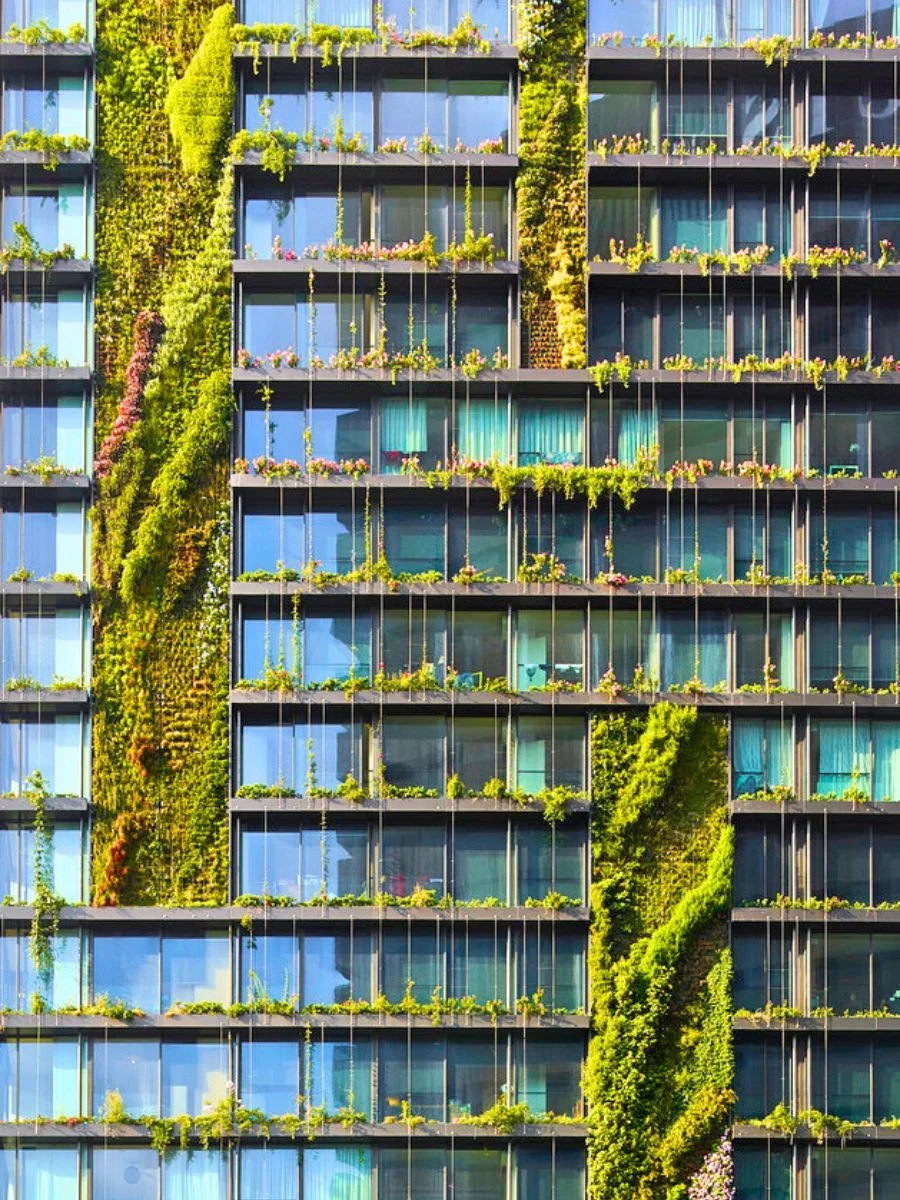
One Central Park, Sydney, Australia, designed on Biophilic principles
A closing thought
As cities continue to grow and screen time continues to rise, the role of art is expanding. Biophilic art offers a way to quietly reintroduce nature into daily life, not as decoration, but as a meaningful part of how spaces support human wellbeing. In that sense, it's less an aesthetic choice and more an increasingly important human-centred design consideration.
